Binary Addition Subtraction Multiplication Division Rules
If a 4-bit sum is equal to or less than 9 it is a valid BCD number. If a division is possible put 1 to the quotient.
Binary Arithmetic Tutorialspoint
The goal of this study is for each student to gain knowledge about Binary Arithmetic and youll have the opportunity to practice Binary addition subtraction multiplication and division problems.
Binary addition subtraction multiplication division rules. If subtraction is possible put a 1 in the quotient and subtract the divisor from the corresponding digits of dividend. Multiplication in binary is exactly as it is in decimal ie. Start from the left of the dividend.
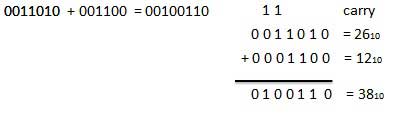
Example Addition Binary Subtraction. For understanding the binary addition first considers the addition of two decimal numbers as shown below. There are several sites given to help you gain further more knowledge in Binary Arithmetic.
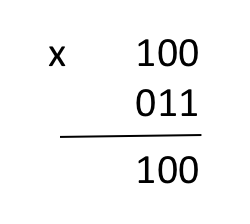
Also remember that for every left shift of digit of the multiplier an extra zero needs to be. 0 0 0. Typically 0 and 1.
In mathematics and digital electronics a binary number is a number expressed in the base-2 numeral system or binary numeral system which uses only two symbols. The dividend is still divided by the divisor in the same manner with the only significant difference being the use of binary rather than decimal subtraction. First check if the leftmost bit 1 of the Multiplicand 1001 is bigger or equal to the Multiplier 11.
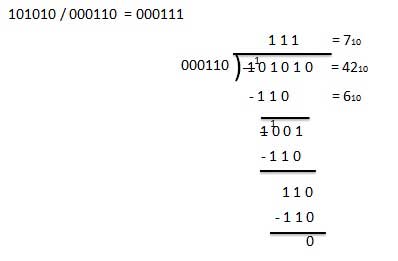
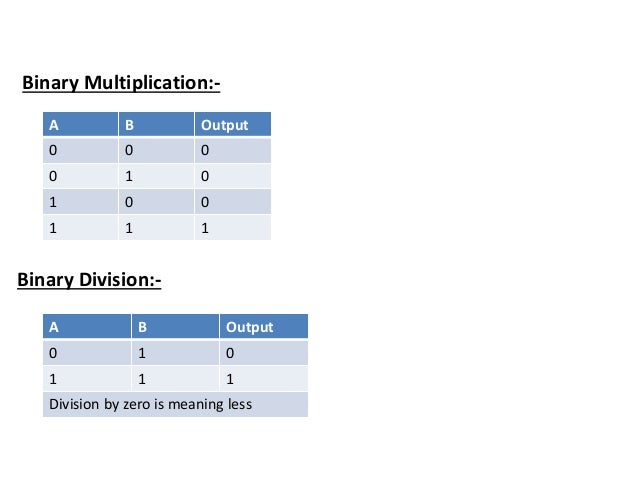
Binary Division is similar to decimal division. Note that a good understanding of binary subtraction is important for conducting binary division. Perform a series of subtraction in which the divisor is subtracted from the dividend.
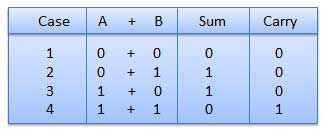
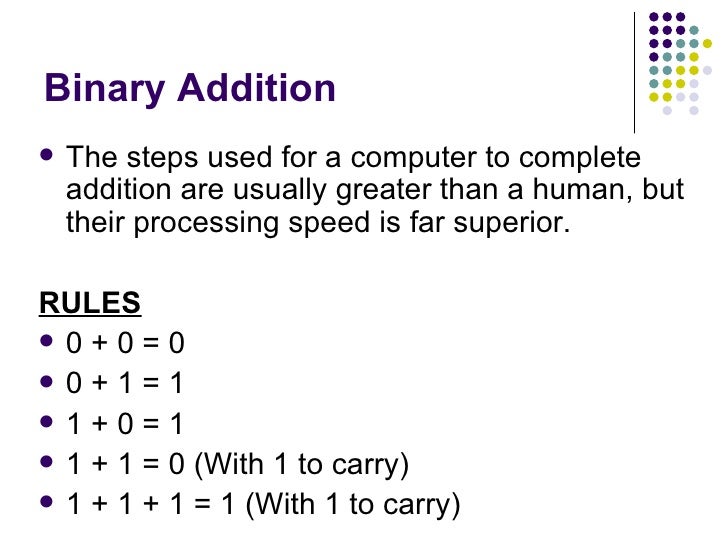
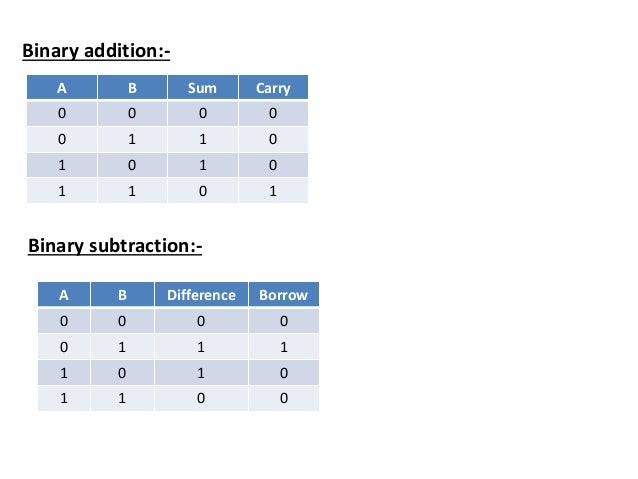
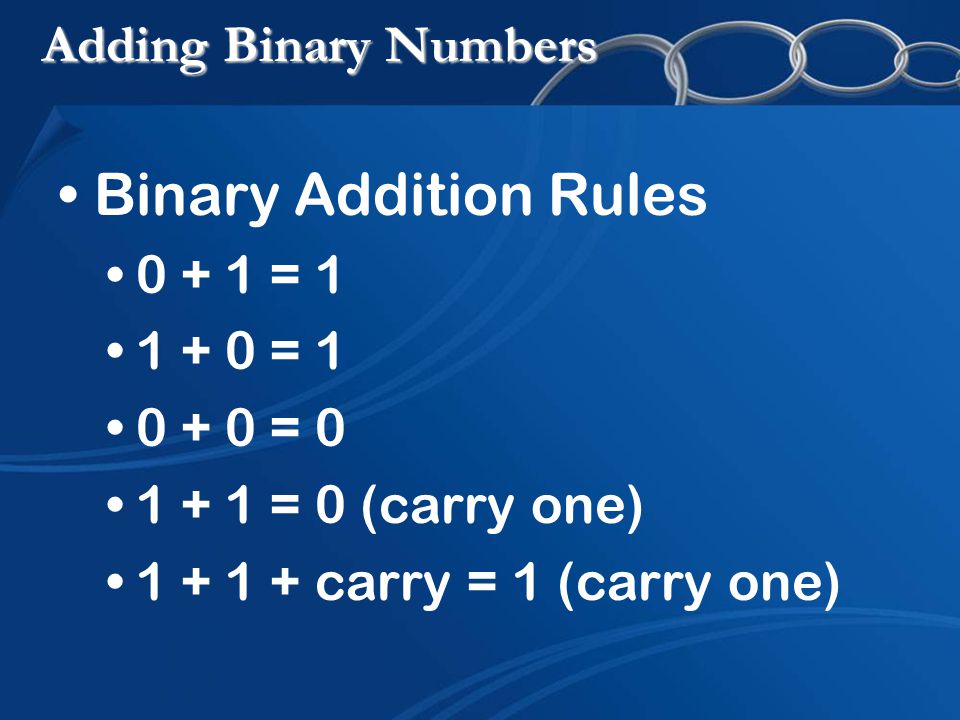
There are four rules of binary addition. It is not then 0 is subtracted and 0 is written in the Total just above the checked bit. 1 0 0 1 0.
To do binary multiplication and division we need to be familiar with the rules for binary addition and subtraction. Multiplication in binary is exactly as it is in decimal ie. The binary subtraction has two new terms involved the difference and the borrow.
Multiply numbers right to left and multiply each digit of one number to every digit of the. Add 1 to the lower number10001101Step 4. Invert the digits of the lower number10001100.
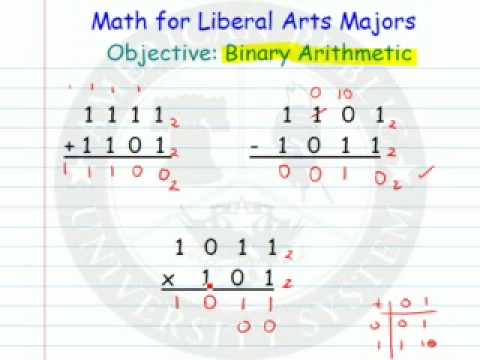
When we added the ones column of the binary digit ie 74 we get the number which is greater than the base of the decimal number the base of the number is 10 and the sum of the digit is 11. Add the two BCD numbers using the rules for binary addition. The addition and subtraction of binary number systems are explained below in details.
Binary Addition Example. Multiplication and subtraction are discussed in binary multiplication and binary subtraction. The last checked number 1 goes down along with the bit on its right 0.
1 10 ie. For binary multiplication we follow the same process as multiplying two. The carry overflow is shown above the operands.
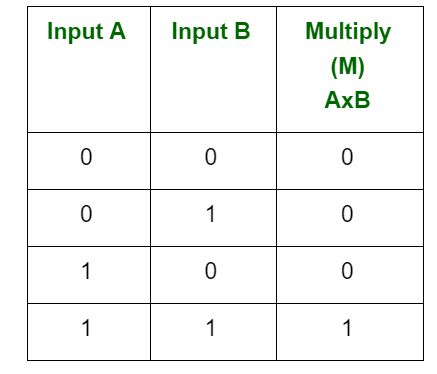
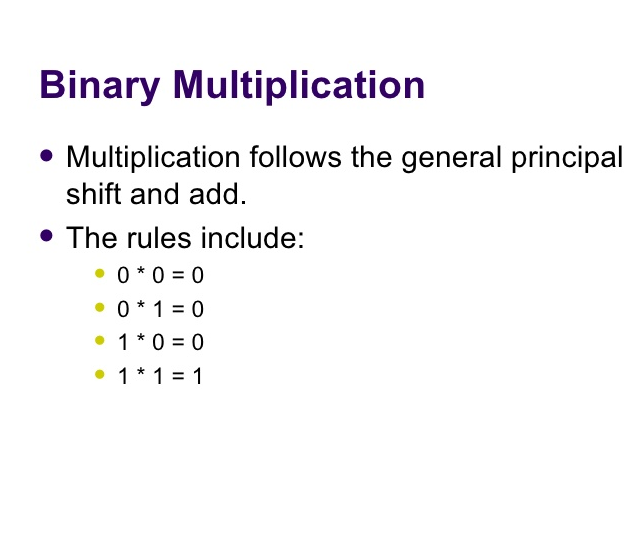
The base-2 numeral system is a positional notation with a radix of 2. The 3 basic binary multiplication rules are also similar to decimal. Add those two numbers together to get 10101Step 5.
0 0 0. Addition is the most important operation because the other three operations subtraction multiplication and division can be accomplished by the use of addition. The process of binary division is similar to long division in the decimal system.
The result is 10. 1 1 1. It is a key for binary subtraction multiplication division.
Write the equation out padding the bottom number with 0s10000011 Step 2. 0 is written in the given column and a carry of 1 over to the next column. If a number cannot be divided put 0 to the quotient.
There are four rules of binary addition. For this reason you need to make sure you are also familiar with binary addition and subtraction. Binary Multiplication Binary division and multiplication are both pretty easy operations.
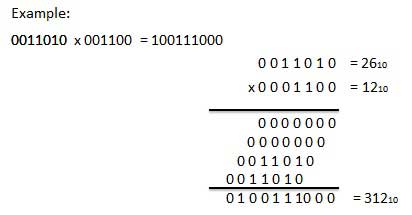
Remove the leading 1. Multiply numbers right to left and multiply each digit of one number to every digit of the other number them sum them up. If subtraction is not.
Each digit is referred to as a bit or binary digitBecause of its straightforward implementation in digital electronic circuitry using. Division 1001ten Quotient Divisor 1000ten 1001010ten Dividend-1000 10 101 1010-1000 10ten Remainder At every step shift divisor right and compare it with current dividend if divisor is larger shift 0 as the next bit of the quotient if divisor is smaller subtract to get new dividend and shift 1 as the next bit of the quotient. This example of binary arithmetic demonstrates the operation of binary addition.
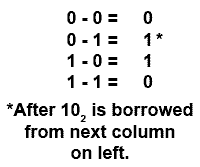
In fourth case a binary addition is creating a sum of 1. We have four main rules to remember for the binary Subtraction. BINARY ARITHMETIC Binary Addition Binary Subtraction Binary Multiplication Binary Division Binary Addition It is a key for binary subtraction multiplication division.
Instead of dealing with a lot of numbers you just need to make sure to set the 1 or 0 in the right place. The rules for binary division are. Here is how to add two BCD numbers.
Binary Arithmetic
Binary Arithmetic Tutorialspoint
Binary Arithmetic Tutorialspoint

Binary Arthmetic
Binary Arithmetic Tutorialspoint

Binary Arithmetic Operations How To Do The Basics Electrical4u
Rules Of Binary Mathematics Dan S Work To Remember Tej201 01

Binary Multiplication Rules Examples
Arithmetic Operations Of Binary Numbers Geeksforgeeks

Binary Division Multiplication Rules Examples Video Lesson Transcript Study Com

Binary Arithmetic Operations Playing With The Numbers
Binary Arithmetic Rules
Binary Arithmetic Rules

Eet 1131 Unit 7 Arithmetic Operations And Circuits Ppt Download
Binary Division Multiplication Rules Examples Video Lesson Transcript Study Com
Digital Electronics Binary Arithmetic

Binary Arithmetic All Rules And Operations
Hexadecimal And Binary Arithmetic Notes Videos Qa And Tests Grade 9 Computer Number System Kullabs
Binary Addition Rules Adding Binary Numbers 1 Ppt Download